

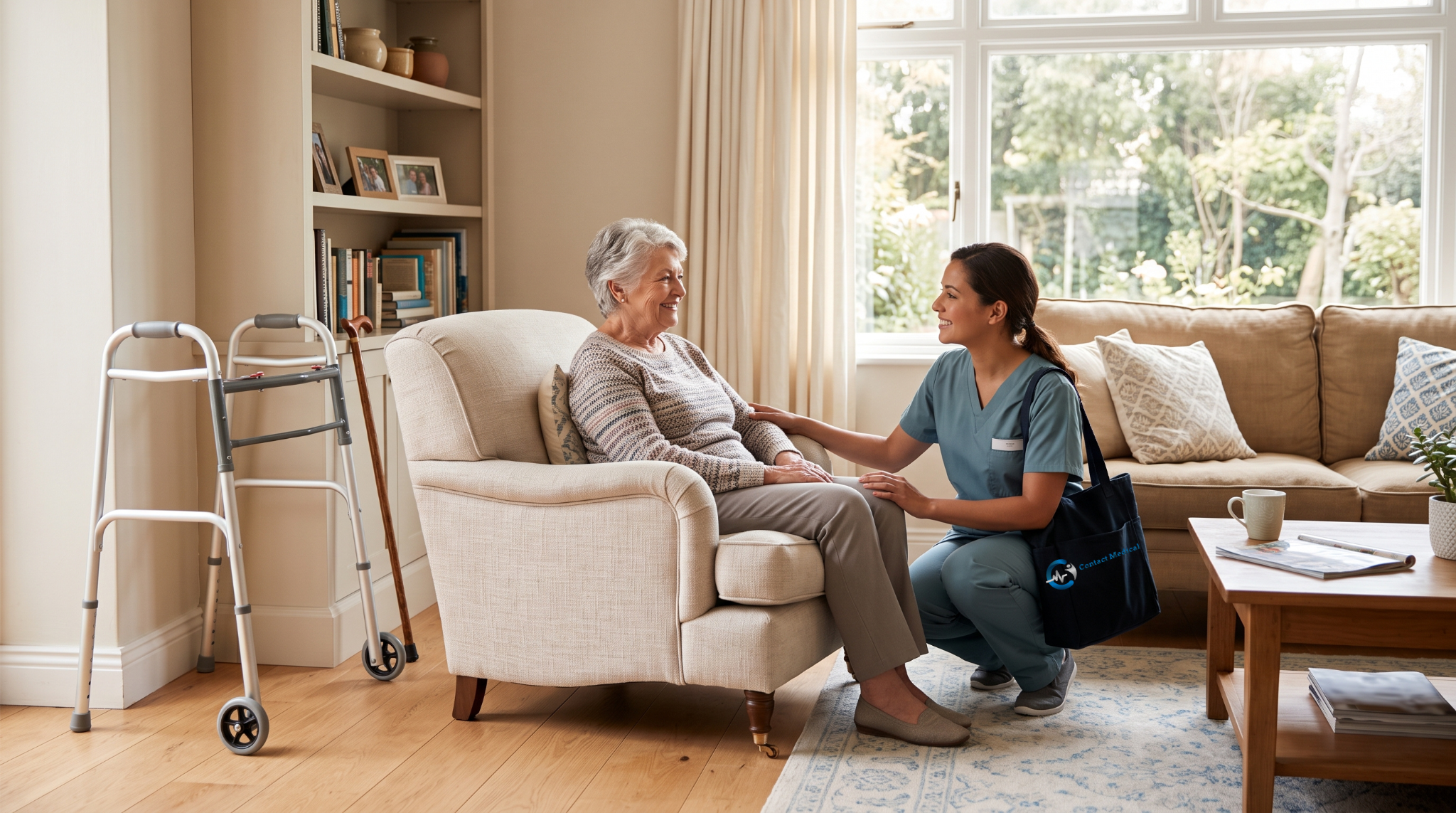
Aging in Place: How Home Health & DME Help Seniors Stay Independent Longer
Home isn't just a place—it's independence. Discover how home health care and equipment help seniors stay safely where they belong.
Every August 21, National Senior Citizens Day reminds us to celebrate the older adults in our lives — but for those of us in home health and durable medical equipment (DME), that appreciation shows up in our work every single day. Most seniors, when asked, say the same thing: they want to stay in their own home for as long as possible. That preference has a name — aging in place — and it's more achievable today than ever, with the right support.
In this post, we'll look at what aging in place really means, the biggest challenges seniors face in doing it safely, and how home health services and DME work together to make it possible.
What Does "Aging in Place" Actually Mean?
Aging in place simply means living in your own home and community safely, independently, and comfortably, regardless of age or ability level — rather than moving to a nursing home or assisted living facility. For many seniors, it's not just a preference; it's tied to dignity, familiarity, and quality of life.
But aging in place doesn't mean aging alone or without support. It means bringing the right care and resources to the home, instead of moving the person away from it.
The Biggest Challenges to Staying Home Safely
Most seniors don't leave their homes because they want to — they leave because a specific problem becomes too hard to manage. The most common ones we see include:
Fall risk. Falls are one of the leading causes of injury-related hospitalization for older adults, often triggered by poor mobility support, loose rugs, or a lack of grab bars and safety equipment.
Difficulty managing chronic conditions. Diabetes, COPD, heart failure, and similar conditions often require regular monitoring that's hard to keep up with alone.
Recovery after a hospital stay. Post-surgical or post-hospitalization recovery at home can be daunting without skilled nursing support.
Mobility limitations. Getting in and out of bed, the shower, or a chair safely often requires equipment that wasn't needed a few years earlier.
Isolation. Physical challenges often lead to reduced social contact, which affects mental health as much as physical health.
The good news: nearly all of these are manageable with the right combination of home health services and equipment.
How Home Health Services Support Aging in Place
Skilled home health care brings medical support directly into the home, including:
Skilled nursing visits for wound care, medication management, and monitoring chronic conditions
Physical and occupational therapy to maintain or rebuild strength, balance, and independence with daily tasks
Post-hospital recovery support to reduce the risk of readmission
Health monitoring that catches small issues before they become emergencies
How DME Fills in the Gaps
Durable medical equipment addresses the physical safety side of independent living. Common examples include:
Mobility aids — walkers, wheelchairs, and canes suited to the individual's needs
Hospital beds for those who need positioning support or easier transfers
Bathroom safety equipment — grab bars, shower chairs, and raised toilet seats to prevent one of the most common fall locations
Patient lifts to safely assist transfers for those with limited mobility
The right equipment, matched to the right need, is often the difference between a close call and a safe recovery.
When to Start the Conversation
You don't need to wait for a crisis to start planning for aging in place. Good moments to start the conversation include:
After a fall, even a minor one
Following a hospital stay or new diagnosis
When a loved one starts showing signs of struggling with daily tasks
When family members live far away and worry about day-to-day safety
We're Here to Help
Whether you're a senior planning ahead, or a family member trying to support a parent or loved one, our team can help put together the right combination of home health services and equipment — and we'll work with you on coverage, whether that's through your insurance, a Single Case Agreement, or self-pay options.
This National Senior Citizens Day, we're honoring the seniors we serve by continuing to do what we do best: helping people stay safe, supported, and at home.
Have questions about care options for yourself or a loved one? Email us at info@contactmed.net or call us at (770) 858-5238 to talk with our team.
This post is for general informational purposes and is not a substitute for medical advice. Please consult a healthcare professional to determine the right care plan for your specific situation.
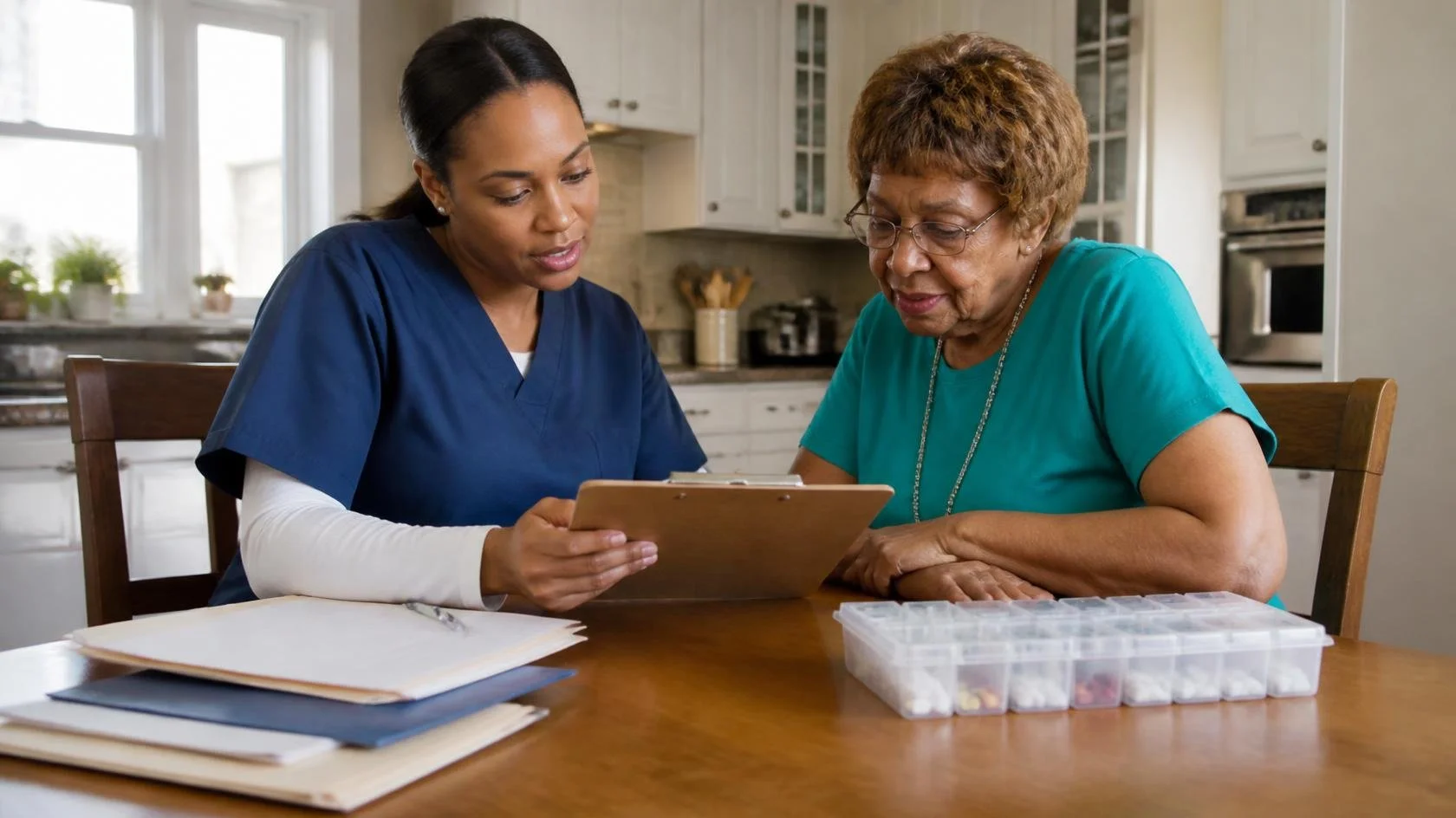
How to Prepare for a Home Health Nurse's First Visit
Home health nurse's first visit coming up? A little prep goes a long way. Here's a simple checklist to help ease the nerves — what to gather, what to expect, and what to do after.
If you or a loved one has a home health nurse's first visit coming up, it's completely normal to feel a little uncertain about what to expect. Will they need paperwork? Should the house be spotless? What if you forget to mention something important?
Take a breath — a little preparation goes a long way, and this checklist will help the first visit go smoothly for everyone involved.
Before the Visit
Gather Your Medical Information
Having key documents on hand saves time and helps your nurse get a full picture of your health. Try to have the following ready:
A current list of all medications, including dosages and how often they're taken
Names and contact information for your primary doctor and any specialists
Recent hospital discharge paperwork, if applicable
Insurance card and ID
A list of known allergies
Write Down Your Questions and Concerns
It's easy to forget questions in the moment, especially if you're feeling anxious. Keep a running list in the days leading up to the visit — no question is too small. Common ones include:
How often will visits happen, and how long will they last?
What should I do if I have a concern between visits?
What symptoms should prompt an immediate call versus waiting for the next scheduled visit?
Tidy Up Key Areas — But Don't Stress About Perfection
Your nurse isn't there to judge your housekeeping. That said, it helps to have a few things in place:
Clear a path to a well-lit area where the nurse can examine you comfortably, such as a chair or bed
Have good lighting available in that space
Keep pets secured in another room during the visit, unless otherwise discussed
Have a Support Person Present, If Possible
If you're helping a parent or loved one, try to be there for at least the first visit. An extra set of ears helps make sure nothing important gets missed, and it gives the nurse a chance to answer caregiver-specific questions too.
During the Visit
Be Honest About Symptoms and Challenges
Nurses are there to help, not to judge. If you've been skipping medications, struggling with a task, or feeling overwhelmed, saying so helps your nurse build a care plan that actually fits your real life — not just the version that sounds good on paper.
Ask About the Plan of Care
By the end of the first visit, you should have a general understanding of:
What the goals of care are
How often the nurse (or other home health team members) will visit
What role, if any, other services like physical therapy or home health aides might play
Any equipment that might be recommended
Don't Be Afraid to Ask Things Twice
There's often a lot of information shared in a first visit. If something doesn't make sense, ask again — a good home health nurse expects and welcomes these questions.
After the Visit
Keep the Plan of Care Somewhere Visible
Whether it's a printed copy on the fridge or a note by the medication organizer, having the plan somewhere easy to reference helps everyone — patient, family, and caregivers — stay on the same page between visits.
Know Who to Call
Make sure you have clear contact information for both routine questions and urgent concerns. Most home health agencies provide an after-hours number for exactly this reason — keep it somewhere easy to find, not just buried in an email.
Note Any Follow-Up Items
If the nurse mentioned needing to check in with your doctor, order equipment, or schedule additional services, jot it down so you can follow up if you haven't heard back within the expected timeframe.
A Quick Pre-Visit Checklist
Medication list ready
Doctor and specialist contact info on hand
Insurance card and ID accessible
Questions written down
Clear, well-lit space set up
Support person available, if possible
Pets secured, if needed
We're Here to Make This Easier
The first visit is really just the start of a partnership. Our goal is to make sure you feel informed, comfortable, and supported — not overwhelmed. If you have questions before your visit even begins, don't hesitate to reach out.
Have a first visit coming up, or questions about getting started? Email us at info@contactmed.net or call us at (770) 858-5238 — we're happy to walk you through what to expect.
This post is for general informational purposes and is not a substitute for medical advice. Please consult your care team for guidance specific to your situation.

5 Signs It Might Be Time for Home Health Care
Not sure if it's time for home health care? Here are 5 signs to watch for — from medication struggles to a recent fall or close call.
Deciding when to bring in home health care for a loved one is rarely a single, obvious moment. More often, it's a series of small changes — a missed medication here, a close call there — that quietly add up until a family realizes something needs to shift. If you've been noticing changes in a parent, spouse, or loved one and wondering whether it's "too soon" or "not serious enough" to ask for help, this post is for you.
Here are five signs that often mean it's time to start the conversation about home health care.
1. Managing Medications Has Become a Struggle
Missed doses, doubled-up pills, or a medicine cabinet full of confusing bottles are more than an inconvenience — they're one of the most common reasons for preventable hospitalizations among older adults. If you've noticed a loved one forgetting whether they've taken a medication, mixing up dosages, or simply feeling overwhelmed by a growing list of prescriptions, a skilled nurse can help manage medications safely and catch problems before they become emergencies.
2. There's Been a Fall — Or a Close Call
A single fall is one of the clearest signals that additional support is needed at home. Even if no injury occurred, a fall often points to underlying issues with balance, strength, vision, or home safety hazards. Home health services, including physical therapy and safety equipment recommendations, can significantly reduce the risk of a more serious fall down the road.
3. Recovery After a Hospital Stay Isn't Going Smoothly
Coming home after a hospitalization or surgery is often harder than families expect. If a loved one seems weaker than before, is struggling with wound care, or simply isn't bouncing back the way they used to, skilled home health support can bridge the gap between hospital discharge and full recovery — and help avoid a return trip to the hospital.
4. Everyday Tasks Are Becoming More Difficult
Bathing, dressing, cooking, cleaning, or getting around the house safely are things most of us don't think twice about — until they become genuinely hard. If you've noticed a loved one skipping meals, wearing the same clothes for days, or avoiding the shower because it feels unsafe, that's often a sign that support with daily living is needed, not just a lecture about "trying harder."
5. Chronic Conditions Are Getting Harder to Manage Alone
Conditions like diabetes, COPD, heart failure, or hypertension require consistent monitoring and management. If blood sugar levels are swinging unpredictably, breathing seems more labored, or a loved one has been in and out of the ER for the same underlying issue, regular home health visits can help stabilize their condition and catch warning signs early — often before a crisis develops.
You Don't Need a Crisis to Start the Conversation
One of the most common regrets families share with us is waiting too long — often until after a fall, a hospitalization, or a scary close call — to bring in support. You don't need to wait for a crisis. If even one or two of these signs feel familiar, it's worth having a conversation, both with your loved one and with a home health provider, about what support might look like.
How We Can Help
Our team can start with a simple conversation to understand your loved one's specific situation, whether that means skilled nursing visits, physical therapy, help with daily activities, or the right durable medical equipment to keep them safe at home. And if you're worried about cost, we're happy to walk you through your options — including insurance coverage, Single Case Agreements for out-of-network plans, or self-pay pricing — so financial concerns don't stand in the way of getting the right care.
Noticing some of these signs in a loved one? Email us at info@contactmed.net or call us at (770) 858-5238 to talk with our team about what home health care could look like for your family.
This post is for general informational purposes and is not a substitute for medical advice. Please consult a healthcare professional to determine the right care plan for your specific situation.
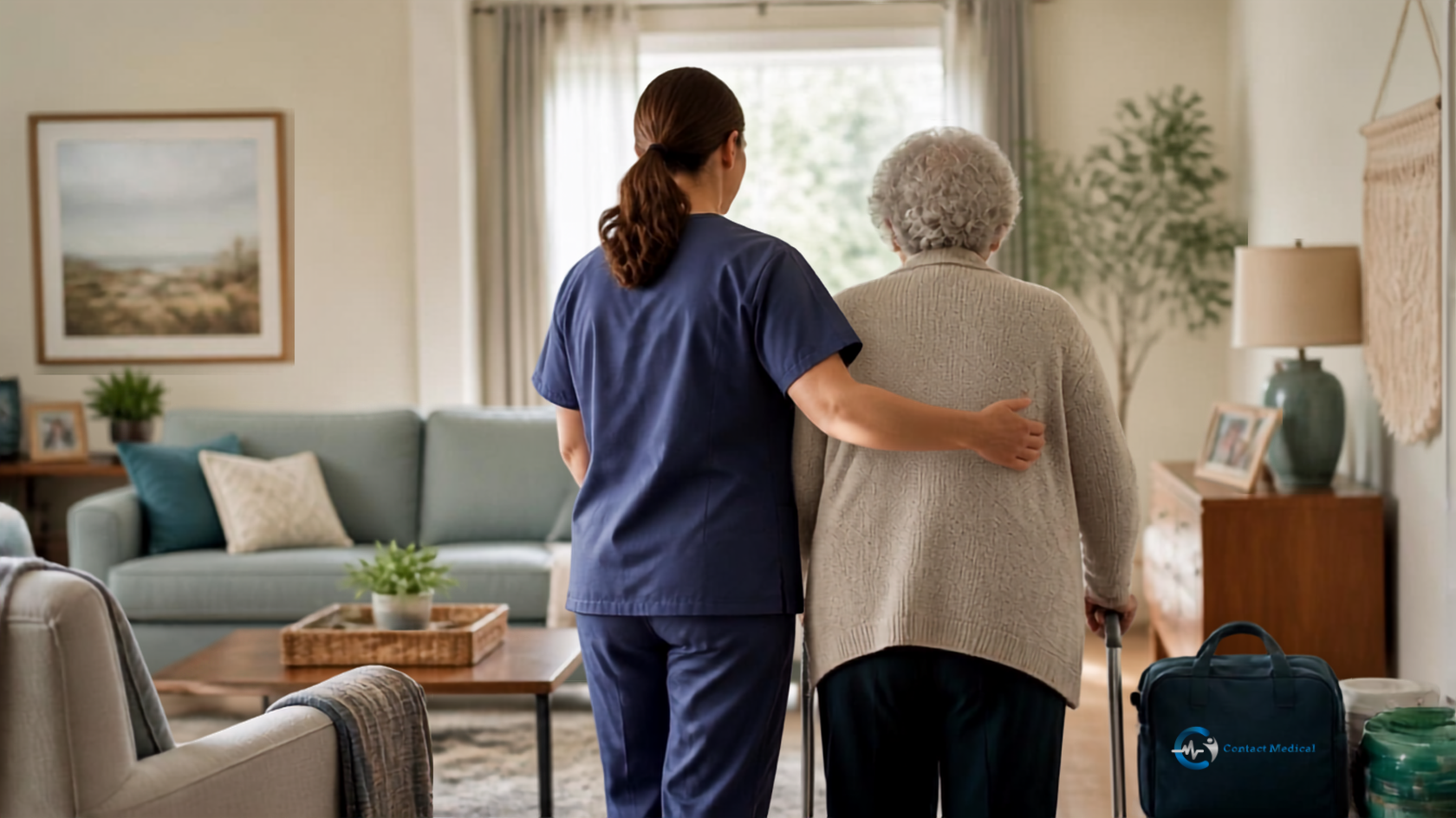
What Is a Single Case Agreement? A Guide for Patients Seeking Home Health & DME Coverage
Wondering if your insurance will cover care from an out-of-network provider? A Single Case Agreement might be the answer — here's how it works.
If your insurance plan doesn't include Contact Medical as an in-network provider, you might assume you're stuck paying full price out of pocket — or worse, going without the home health care or durable medical equipment (DME) you need. That's not always the case. There's a tool many patients don't know exists: the Single Case Agreement.
In this post, we'll break down what a Single Case Agreement is, when it makes sense, how the process works, and what to expect if you ask us to pursue one on your behalf.
What Is a Single Case Agreement (SCA)?
A Single Case Agreement is a one-time contract between an out-of-network provider — like us — and the referrer. It allows us to cover the services as if we were in-network, just for your specific episode of care, without requiring us to join their network permanently.
Think of it as a temporary bridge: your plan doesn't cover us broadly, but for your particular situation, we can agree to make an exception.
Why Would an Insurance Company Agree to This?
Insurers aren't in the business of saying yes just to be generous — they agree to SCAs when it makes sense for everyone involved. Common reasons include:
No in-network alternative. If there isn't another home health agency or DME supplier in-network that can meet your specific clinical needs, location, or timeline, the insurer may prefer an SCA over leaving you without care.
Continuity of care. If you're already receiving care from us — say, after a hospital discharge or a change in your insurance plan — interrupting that care could hurt your outcomes and cost the insurer more in the long run.
Cost efficiency. Sometimes an SCA at a negotiated rate is actually cheaper for the insurer than the alternative, whether that's a different provider or a preventable hospital readmission.
When Should You Consider Requesting One?
An SCA is worth exploring any time:
You've been referred to us but your plan lists us as out-of-network
You're switching insurance plans mid-treatment and want to continue care with the same team
You need specialized DME or home health services that aren't readily available in-network in your area
You're being discharged from a hospital or facility and need care to start quickly, before an in-network provider can be arranged
How the Process Works
Requesting a Single Case Agreement isn't something you have to figure out alone — our billing team handles it for you. Here's generally what happens:
We verify your coverage and confirm we're out-of-network for your specific plan.
We submit an SCA request to the referrer, along with clinical documentation supporting why care with us is appropriate — for example, urgency, lack of in-network alternatives, or continuity of an existing treatment plan.
The referrer reviews the request, which can take anywhere from a few days to a couple of weeks depending on the plan and urgency of your situation.
We follow up and negotiate terms if needed, including the agreed rate and scope of covered services.
You're notified of the outcome. If approved, we move forward with your care under in-network-level coverage. If it isn't approved, we'll walk you through your other options, including transparent self-pay pricing.
What If the SCA Isn't Approved?
Not every request is approved, and that's okay — you still have options. We offer clear, up-front self-pay rates for home health visits and DME with no hidden fees, so you can make an informed decision about how to move forward without surprises on your bill.
The Bottom Line
Insurance coverage isn't always black and white, and being out-of-network doesn't automatically mean coverage is impossible. A Single Case Agreement can be the difference between delaying care and getting started right away — and pursuing one costs you nothing but a conversation with our team.
If you've been referred to us and aren't sure whether your plan covers our services, reach out. We'll check your coverage, explain your options — including a Single Case Agreement or self-pay pricing — and help you get the care or equipment you need without the runaround.
Have questions about your coverage? Email us at info@contactmed.net or call us at (770) 858-5238 to speak with our Intake team.
This post is for general informational purposes and does not guarantee insurance coverage or approval of any Single Case Agreement. Coverage decisions are made by your insurance provider on a case-by-case basis.