


Aging in Place: How Home Health & DME Help Seniors Stay Independent Longer
Home isn't just a place—it's independence. Discover how home health care and equipment help seniors stay safely where they belong.
Every August 21, National Senior Citizens Day reminds us to celebrate the older adults in our lives — but for those of us in home health and durable medical equipment (DME), that appreciation shows up in our work every single day. Most seniors, when asked, say the same thing: they want to stay in their own home for as long as possible. That preference has a name — aging in place — and it's more achievable today than ever, with the right support.
In this post, we'll look at what aging in place really means, the biggest challenges seniors face in doing it safely, and how home health services and DME work together to make it possible.
What Does "Aging in Place" Actually Mean?
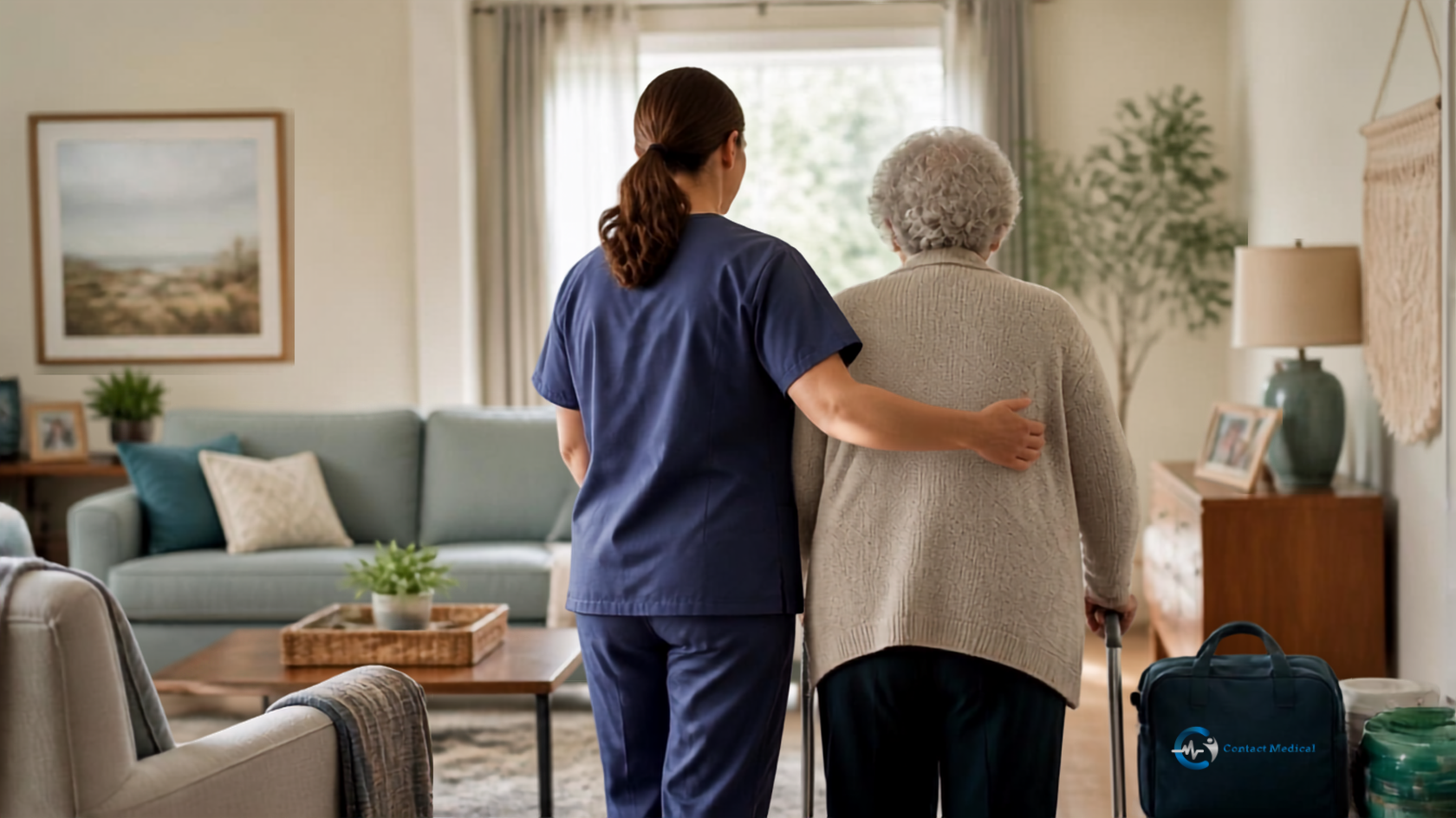
Aging in place simply means living in your own home and community safely, independently, and comfortably, regardless of age or ability level — rather than moving to a nursing home or assisted living facility. For many seniors, it's not just a preference; it's tied to dignity, familiarity, and quality of life.
But aging in place doesn't mean aging alone or without support. It means bringing the right care and resources to the home, instead of moving the person away from it.
The Biggest Challenges to Staying Home Safely
Most seniors don't leave their homes because they want to — they leave because a specific problem becomes too hard to manage. The most common ones we see include:
Fall risk. Falls are one of the leading causes of injury-related hospitalization for older adults, often triggered by poor mobility support, loose rugs, or a lack of grab bars and safety equipment.
Difficulty managing chronic conditions. Diabetes, COPD, heart failure, and similar conditions often require regular monitoring that's hard to keep up with alone.
Recovery after a hospital stay. Post-surgical or post-hospitalization recovery at home can be daunting without skilled nursing support.
Mobility limitations. Getting in and out of bed, the shower, or a chair safely often requires equipment that wasn't needed a few years earlier.
Isolation. Physical challenges often lead to reduced social contact, which affects mental health as much as physical health.
The good news: nearly all of these are manageable with the right combination of home health services and equipment.
How Home Health Services Support Aging in Place
Skilled home health care brings medical support directly into the home, including:
Skilled nursing visits for wound care, medication management, and monitoring chronic conditions
Physical and occupational therapy to maintain or rebuild strength, balance, and independence with daily tasks
Post-hospital recovery support to reduce the risk of readmission
Health monitoring that catches small issues before they become emergencies
How DME Fills in the Gaps
Durable medical equipment addresses the physical safety side of independent living. Common examples include:
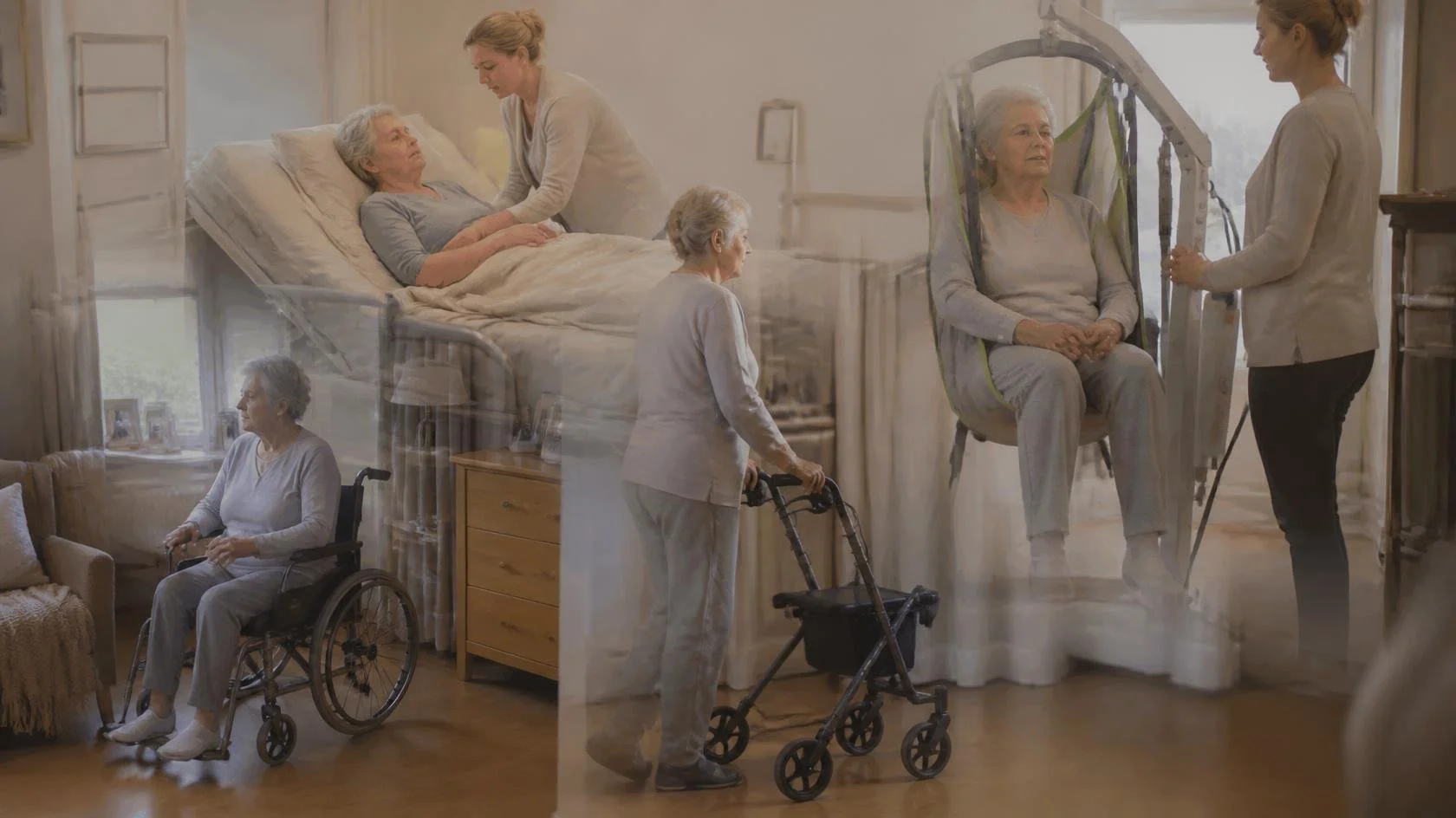
Mobility aids — walkers, wheelchairs, and canes suited to the individual's needs
Hospital beds for those who need positioning support or easier transfers
Bathroom safety equipment — grab bars, shower chairs, and raised toilet seats to prevent one of the most common fall locations
Patient lifts to safely assist transfers for those with limited mobility
The right equipment, matched to the right need, is often the difference between a close call and a safe recovery.
When to Start the Conversation
You don't need to wait for a crisis to start planning for aging in place. Good moments to start the conversation include:
After a fall, even a minor one
Following a hospital stay or new diagnosis
When a loved one starts showing signs of struggling with daily tasks
When family members live far away and worry about day-to-day safety
We're Here to Help
Whether you're a senior planning ahead, or a family member trying to support a parent or loved one, our team can help put together the right combination of home health services and equipment — and we'll work with you on coverage, whether that's through your insurance, a Single Case Agreement, or self-pay options.
This National Senior Citizens Day, we're honoring the seniors we serve by continuing to do what we do best: helping people stay safe, supported, and at home.
Have questions about care options for yourself or a loved one? Email us at info@contactmed.net or call us at (770) 858-5238 to talk with our team.
This post is for general informational purposes and is not a substitute for medical advice. Please consult a healthcare professional to determine the right care plan for your specific situation.
Durable Medical Equipment 101: What's Covered, What's Not
Wheelchairs, hospital beds, and oxygen equipment — what does insurance actually cover? Here's a plain-language breakdown of DME coverage basics, from medical necessity to what's typically excluded.
If you've ever tried to figure out whether your insurance covers a wheelchair, hospital bed, or oxygen concentrator, you already know how confusing durable medical equipment (DME) coverage can be. Different categories of equipment are treated differently by insurers, and the rules aren't always intuitive.
This post breaks down what DME actually means, the main categories you're likely to encounter, and the general basics of how insurance coverage typically works — so you can walk into the conversation with your provider or insurer feeling a little more prepared.
What Counts as Durable Medical Equipment?
Durable medical equipment refers to reusable medical equipment prescribed by a doctor for use in the home. To generally qualify as DME, an item usually needs to meet a few criteria:
It's durable — meaning it can withstand repeated use, not a one-time-use item
It's used for a medical purpose
It's not useful to someone without an illness or injury
It's appropriate for use in the home
That definition is why a wheelchair typically qualifies as DME, but a disposable bandage generally does not — even though both are medical in nature.
Common DME Categories
DME covers a wide range of equipment. Some of the most common categories include:
Mobility equipment — wheelchairs, walkers, canes, and scooters
Hospital beds and positioning equipment — adjustable beds, pressure-relief mattresses, patient lifts
Respiratory equipment — oxygen concentrators, CPAP machines, nebulizers
Bathroom safety equipment — shower chairs, raised toilet seats, grab bars (note: some of these are considered "convenience" items rather than DME by certain insurers — more on that below)
Monitoring devices — blood glucose monitors, blood pressure monitors
Diabetic supplies — insulin pumps and related equipment
How Insurance Coverage Generally Works
Coverage rules vary significantly between Medicare, Medicaid, and private insurance plans, but a few general patterns hold true across most of them:
Medical Necessity Is Usually Required
Insurers typically require documentation from a physician establishing that the equipment is medically necessary — not simply convenient or helpful. This usually comes in the form of a prescription or a signed order, along with supporting clinical documentation.
Rental vs. Purchase
For many items — especially more expensive equipment like hospital beds or oxygen concentrators — insurers may cover a rental period before deciding whether to cover an outright purchase. This is common with Medicare, which often structures DME coverage as a rental arrangement for certain equipment categories.
In-Network vs. Out-of-Network Suppliers
Just like with home health providers, DME suppliers can be in-network or out-of-network with a given insurance plan. Using an out-of-network supplier can mean higher out-of-pocket costs — or in some cases, no coverage at all — unless other arrangements are made.
Prior Authorization
Certain higher-cost equipment often requires prior authorization before an insurer will agree to cover it. Skipping this step is one of the most common reasons DME claims get denied.
What's Typically NOT Covered
This is where things get tricky, since "not typically covered" doesn't always mean "never covered" — it depends heavily on your specific plan. That said, insurers commonly exclude or limit coverage for:
Comfort or convenience items that aren't deemed medically necessary (certain bathroom safety items sometimes fall into this gray area)
Equipment primarily used outside the home
Disposable or single-use supplies in many cases (though some, like diabetic testing strips, are often covered separately under supply benefits)
Upgrades beyond the "medically necessary" standard model (for example, a premium wheelchair feature that isn't required for the patient's specific condition)
Equipment without proper physician documentation
Our Role in the Process
Navigating DME coverage isn't something you should have to figure out alone. Our team works directly with your physician and your insurance plan to verify coverage, submit the required documentation, and handle prior authorizations when needed. If your plan doesn't cover a specific item, or we're out-of-network with your insurer, we'll walk you through your options — including a Single Case Agreement or transparent self-pay pricing — so you understand your costs before equipment is delivered, not after.
Have questions about whether your insurance covers a specific piece of equipment? Email us at info@contactmed.net or call us at (770) 858-5238, and we'll help you sort it out.
This post is for general informational purposes only and does not guarantee coverage. DME coverage varies by insurance plan and individual circumstances — please confirm details with your specific insurer or our billing team.
What Is a Single Case Agreement? A Guide for Patients Seeking Home Health & DME Coverage
Wondering if your insurance will cover care from an out-of-network provider? A Single Case Agreement might be the answer — here's how it works.
If your insurance plan doesn't include Contact Medical as an in-network provider, you might assume you're stuck paying full price out of pocket — or worse, going without the home health care or durable medical equipment (DME) you need. That's not always the case. There's a tool many patients don't know exists: the Single Case Agreement.
In this post, we'll break down what a Single Case Agreement is, when it makes sense, how the process works, and what to expect if you ask us to pursue one on your behalf.
What Is a Single Case Agreement (SCA)?
A Single Case Agreement is a one-time contract between an out-of-network provider — like us — and the referrer. It allows us to cover the services as if we were in-network, just for your specific episode of care, without requiring us to join their network permanently.
Think of it as a temporary bridge: your plan doesn't cover us broadly, but for your particular situation, we can agree to make an exception.
Why Would an Insurance Company Agree to This?
Insurers aren't in the business of saying yes just to be generous — they agree to SCAs when it makes sense for everyone involved. Common reasons include:
No in-network alternative. If there isn't another home health agency or DME supplier in-network that can meet your specific clinical needs, location, or timeline, the insurer may prefer an SCA over leaving you without care.
Continuity of care. If you're already receiving care from us — say, after a hospital discharge or a change in your insurance plan — interrupting that care could hurt your outcomes and cost the insurer more in the long run.
Cost efficiency. Sometimes an SCA at a negotiated rate is actually cheaper for the insurer than the alternative, whether that's a different provider or a preventable hospital readmission.
When Should You Consider Requesting One?
An SCA is worth exploring any time:
You've been referred to us but your plan lists us as out-of-network
You're switching insurance plans mid-treatment and want to continue care with the same team
You need specialized DME or home health services that aren't readily available in-network in your area
You're being discharged from a hospital or facility and need care to start quickly, before an in-network provider can be arranged
How the Process Works
Requesting a Single Case Agreement isn't something you have to figure out alone — our billing team handles it for you. Here's generally what happens:
We verify your coverage and confirm we're out-of-network for your specific plan.
We submit an SCA request to the referrer, along with clinical documentation supporting why care with us is appropriate — for example, urgency, lack of in-network alternatives, or continuity of an existing treatment plan.
The referrer reviews the request, which can take anywhere from a few days to a couple of weeks depending on the plan and urgency of your situation.
We follow up and negotiate terms if needed, including the agreed rate and scope of covered services.
You're notified of the outcome. If approved, we move forward with your care under in-network-level coverage. If it isn't approved, we'll walk you through your other options, including transparent self-pay pricing.
What If the SCA Isn't Approved?
Not every request is approved, and that's okay — you still have options. We offer clear, up-front self-pay rates for home health visits and DME with no hidden fees, so you can make an informed decision about how to move forward without surprises on your bill.
The Bottom Line
Insurance coverage isn't always black and white, and being out-of-network doesn't automatically mean coverage is impossible. A Single Case Agreement can be the difference between delaying care and getting started right away — and pursuing one costs you nothing but a conversation with our team.
If you've been referred to us and aren't sure whether your plan covers our services, reach out. We'll check your coverage, explain your options — including a Single Case Agreement or self-pay pricing — and help you get the care or equipment you need without the runaround.
Have questions about your coverage? Email us at info@contactmed.net or call us at (770) 858-5238 to speak with our Intake team.
This post is for general informational purposes and does not guarantee insurance coverage or approval of any Single Case Agreement. Coverage decisions are made by your insurance provider on a case-by-case basis.