

How to Prepare for a Home Health Nurse's First Visit
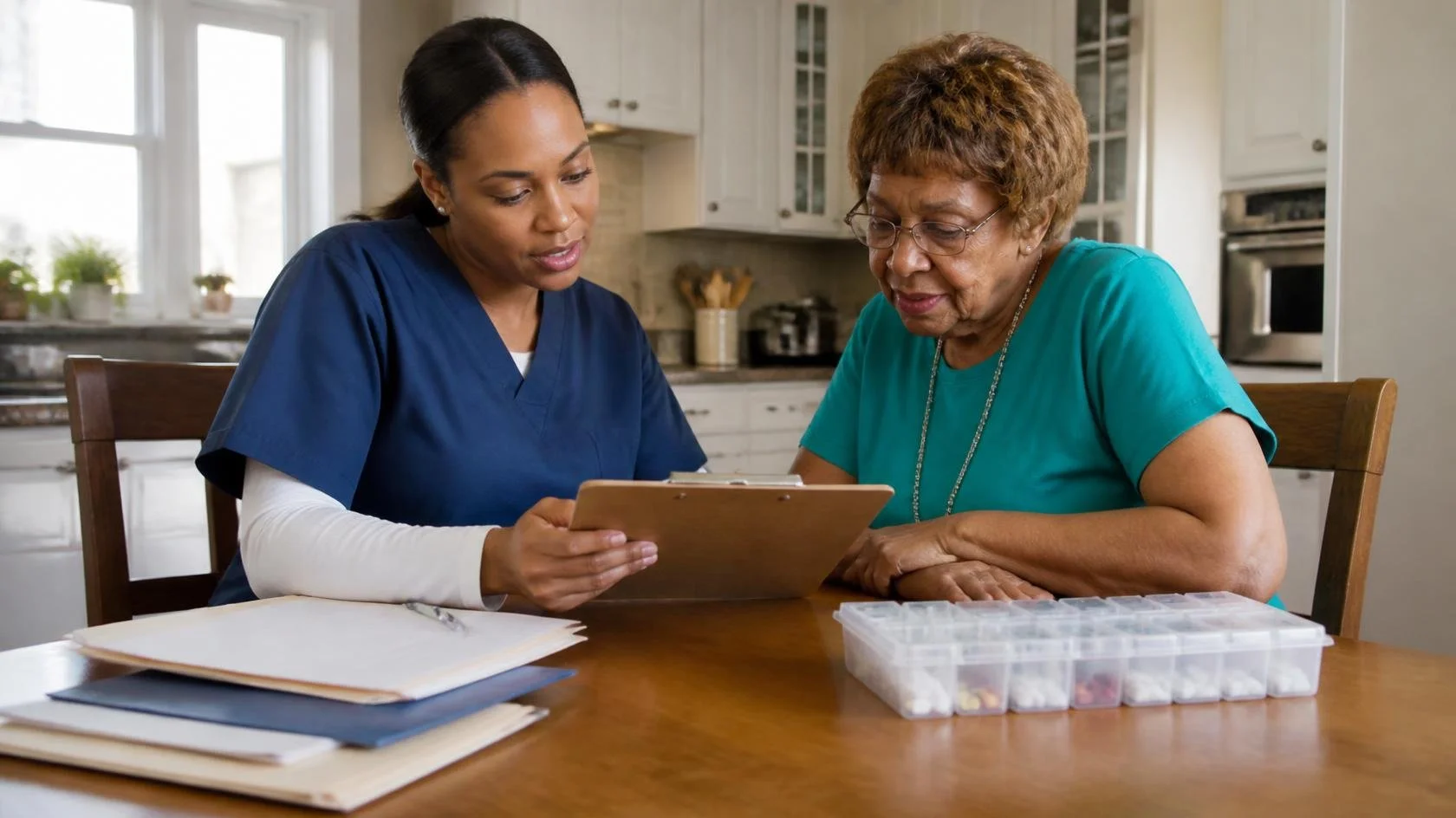
Home health nurse's first visit coming up? A little prep goes a long way. Here's a simple checklist to help ease the nerves — what to gather, what to expect, and what to do after.
If you or a loved one has a home health nurse's first visit coming up, it's completely normal to feel a little uncertain about what to expect. Will they need paperwork? Should the house be spotless? What if you forget to mention something important?
Take a breath — a little preparation goes a long way, and this checklist will help the first visit go smoothly for everyone involved.
Before the Visit
Gather Your Medical Information
Having key documents on hand saves time and helps your nurse get a full picture of your health. Try to have the following ready:
A current list of all medications, including dosages and how often they're taken
Names and contact information for your primary doctor and any specialists
Recent hospital discharge paperwork, if applicable
Insurance card and ID
A list of known allergies
Write Down Your Questions and Concerns
It's easy to forget questions in the moment, especially if you're feeling anxious. Keep a running list in the days leading up to the visit — no question is too small. Common ones include:
How often will visits happen, and how long will they last?
What should I do if I have a concern between visits?
What symptoms should prompt an immediate call versus waiting for the next scheduled visit?
Tidy Up Key Areas — But Don't Stress About Perfection
Your nurse isn't there to judge your housekeeping. That said, it helps to have a few things in place:
Clear a path to a well-lit area where the nurse can examine you comfortably, such as a chair or bed
Have good lighting available in that space
Keep pets secured in another room during the visit, unless otherwise discussed
Have a Support Person Present, If Possible
If you're helping a parent or loved one, try to be there for at least the first visit. An extra set of ears helps make sure nothing important gets missed, and it gives the nurse a chance to answer caregiver-specific questions too.
During the Visit
Be Honest About Symptoms and Challenges
Nurses are there to help, not to judge. If you've been skipping medications, struggling with a task, or feeling overwhelmed, saying so helps your nurse build a care plan that actually fits your real life — not just the version that sounds good on paper.
Ask About the Plan of Care
By the end of the first visit, you should have a general understanding of:
What the goals of care are
How often the nurse (or other home health team members) will visit
What role, if any, other services like physical therapy or home health aides might play
Any equipment that might be recommended
Don't Be Afraid to Ask Things Twice
There's often a lot of information shared in a first visit. If something doesn't make sense, ask again — a good home health nurse expects and welcomes these questions.
After the Visit
Keep the Plan of Care Somewhere Visible
Whether it's a printed copy on the fridge or a note by the medication organizer, having the plan somewhere easy to reference helps everyone — patient, family, and caregivers — stay on the same page between visits.
Know Who to Call
Make sure you have clear contact information for both routine questions and urgent concerns. Most home health agencies provide an after-hours number for exactly this reason — keep it somewhere easy to find, not just buried in an email.
Note Any Follow-Up Items
If the nurse mentioned needing to check in with your doctor, order equipment, or schedule additional services, jot it down so you can follow up if you haven't heard back within the expected timeframe.
A Quick Pre-Visit Checklist
Medication list ready
Doctor and specialist contact info on hand
Insurance card and ID accessible
Questions written down
Clear, well-lit space set up
Support person available, if possible
Pets secured, if needed
We're Here to Make This Easier
The first visit is really just the start of a partnership. Our goal is to make sure you feel informed, comfortable, and supported — not overwhelmed. If you have questions before your visit even begins, don't hesitate to reach out.
Have a first visit coming up, or questions about getting started? Email us at info@contactmed.net or call us at (770) 858-5238 — we're happy to walk you through what to expect.
This post is for general informational purposes and is not a substitute for medical advice. Please consult your care team for guidance specific to your situation.